
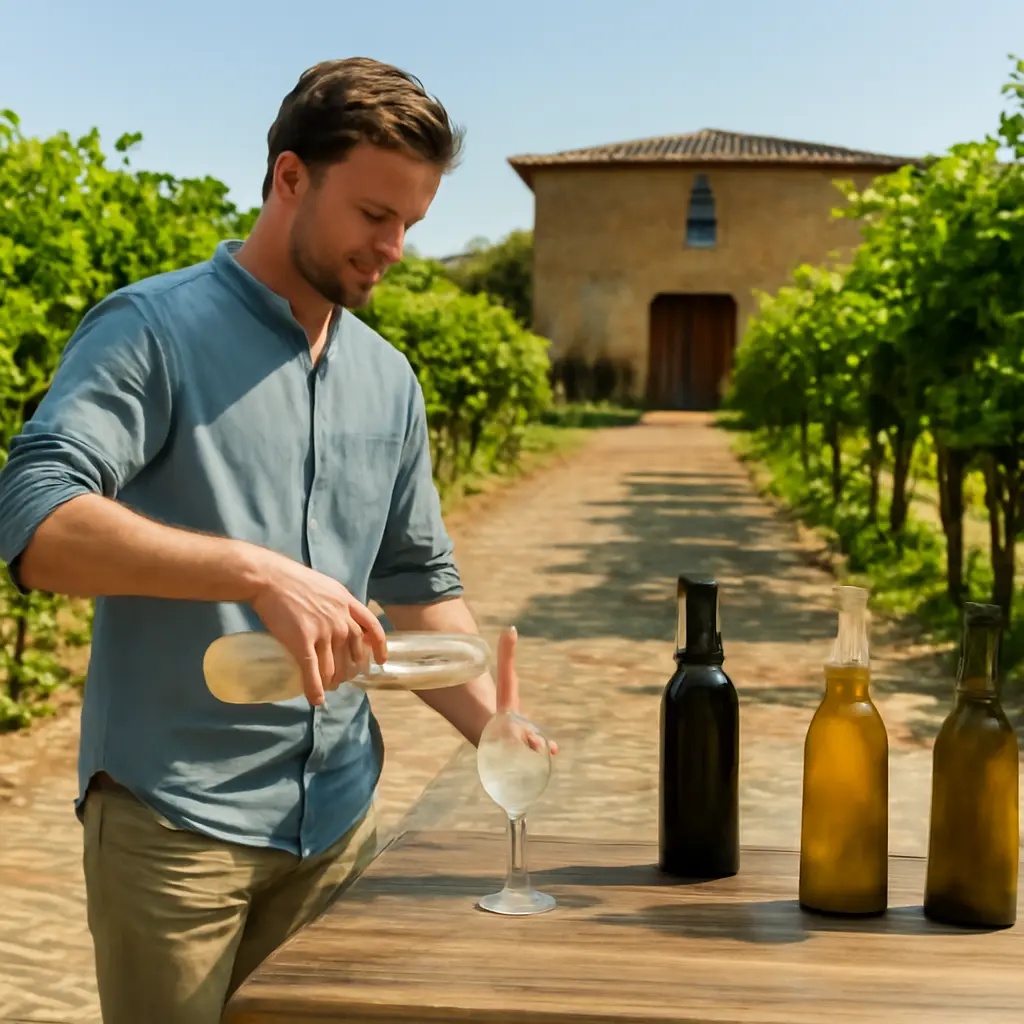
Cloudy natural wine is wine that looks hazy because fine grape solids, yeast, or other particles remain suspended in it rather than being fully removed by settling and filtration. That appearance can signal a less-polished production style, but it is not proof that a wine is natural, healthier, or better made. The story behind the haze is more useful: fermentation choices, clarification, stability, and storage all shape what ends up in the glass. Understanding those factors also explains why some cloudy wines taste lively while others are simply faulty—and why the natural-wine category itself has no single, universally enforced definition.
Cloudiness reveals how natural wine is made
“Natural wine” generally refers to wine made with organically or biodynamically farmed grapes and minimal intervention in the cellar, but the phrase has no globally standardized legal definition. The International Organisation of Vine and Wine (OIV) sets technical rules for wine production, while terms such as “natural wine” are governed differently across markets and certification schemes. As a result, a cloudy bottle may reflect a winemaker’s preference to bottle without fining or filtration, but appearance alone cannot verify farming methods or cellar practices.
The broader context is substantial: the OIV reported that global wine consumption reached about 221 million hectoliters in 2023, while global production was estimated at roughly 237 million hectoliters. Those figures describe the whole wine sector, not natural wine specifically; reliable worldwide data for natural-wine sales remain limited because there is no universal category or reporting standard. Still, natural wine’s visibility has grown through specialist bars, independent retailers, and consumer interest in provenance and production transparency.
What “natural wine” does—and does not—mean
Natural wine is best understood as a broad production philosophy, not a precise promise about ingredients or appearance. Producers often emphasize organically or biodynamically grown grapes, spontaneous fermentation using native yeasts, limited additions, and restrained filtration. Practices vary: one winemaker may add a small amount of sulfur dioxide or filter gently, while another may avoid both. The term does not automatically mean “no additives,” “sulfite-free,” or “unfiltered.”
This distinction matters because all wine contains some naturally occurring sulfites, produced during fermentation. The U.S. Alcohol and Tobacco Tax and Trade Bureau requires a “Contains Sulfites” statement on many wines with at least 10 parts per million of sulfur dioxide. Natural-wine producers may use no added sulfur or use small additions, but the label and producer’s technical information are better guides than cloudiness.
Why some bottles look cloudy
Cloudiness usually comes from suspended material: yeast cells, grape particles, or other colloidal matter left in the wine. During conventional clarification, winemakers may let particles settle, rack the wine off the sediment, use fining agents, or filter it before bottling. Fining can use substances such as bentonite clay, egg white, or gelatin; filtration passes wine through a physical filter to remove particles and, depending on the process, some microorganisms.
A wine bottled without those steps can retain a hazy appearance and sometimes a deposit. That is a stylistic choice, not a separate quality grade. Some producers also bottle cloudy wines intentionally because they prefer the texture or want to avoid removing compounds they believe contribute to aroma and flavor. The haze itself does not establish that the wine is unfiltered: a wine can be filtered and later become cloudy because of instability or poor storage.
Cloudy natural wine can be expressive—or unstable
The key question is not simply whether a wine is cloudy, but what caused the cloudiness and whether the wine is sound. Suspended yeast and fine lees can contribute texture and savory, bread-like notes, while microbial activity or chemical instability can create unwanted haze and off-aromas. A visual cue is therefore a prompt to assess the wine, not a verdict.
Lees, sediment, and texture
Lees are the yeast cells and other particles that settle after fermentation. Fine lees contact is used deliberately in many wine styles, including some sparkling and white wines, because it can add body and texture. When those particles remain suspended, the wine may appear cloudy; when they settle in the bottle, they form sediment. Neither condition is inherently a defect.
A practical example is a bottle of unfiltered red wine with a visible deposit. Letting it stand upright before serving allows heavier particles to settle, and careful pouring can leave most sediment behind. A gentle swirl may be appropriate for a wine intended to be served hazy, but it can also distribute gritty sediment. The producer’s serving advice is useful when available.
Microbial haze and refermentation
Cloudiness can also arise when microorganisms remain active after bottling. Yeasts may consume residual sugar and produce carbon dioxide, making a wine unexpectedly fizzy; bacteria can also cause changes in aroma, flavor, or stability. Some natural wines are intentionally bottled with a light spritz, but uncontrolled refermentation can create excess pressure or spoilage. A fizzy sensation is not automatically a fault, though a leaking closure, unusually forceful bubbles, or unpleasant odors warrant caution.
Wine microbiology is complex, and appearance cannot identify a particular organism. In practical terms, check the wine’s smell and taste as well as its clarity. Vinegar-like sharpness, solvent-like aromas, strong rotten-egg odors, or persistent unpleasant mouse-like notes may indicate a fault. If the bottle smells distinctly spoiled, do not assume the problem is simply “funky natural wine.”
Tartrate crystals and other harmless deposits
Not every deposit is yeast or a sign of poor handling. Tartrate crystals—sometimes called wine diamonds—can form when tartaric acid and potassium combine, particularly after cold storage. These crystals are harmless, though they can look surprising in a bottle. They are more common in wines that have not been cold-stabilized, a process that encourages crystals to form before bottling so they can be removed.
A deposit that looks crystalline differs from a general haze, but consumers do not need to diagnose it with certainty. Chilling a bottle can encourage some sediment to settle; careful pouring can keep it out of the glass. If the wine otherwise smells and tastes sound, crystals alone are not a reason to discard it.
How production choices shape the glass
Haze is one visible outcome of cellar decisions, alongside choices about fermentation, sulfur dioxide, and filtration. These choices involve trade-offs: removing particles can improve visual stability, while less processing may preserve a producer’s preferred texture and expression. Neither approach guarantees quality, and the best choice depends on the grapes, the wine’s intended style, and the conditions in which it will be stored.
Native-yeast fermentation and minimal additions
Native-yeast fermentation relies primarily on microorganisms present on the grapes and in the winery rather than a selected commercial yeast culture. It can produce distinctive aromas and a fermentation that develops at its own pace, but it may also be less predictable. “Spontaneous” does not mean that no biological process is involved: yeast and bacteria are essential to fermentation, and the winemaker still makes decisions about temperature, oxygen exposure, timing, and blending.
Likewise, minimal additions do not mean that every wine is made the same way. Producers may use sulfur dioxide to limit oxidation and microbial growth, or omit it to pursue a particular style. Low-intervention wines can be carefully monitored; intervention level and quality control are not opposites.
Fining and filtration are tools, not quality labels
Fining and filtration address different winemaking needs. Fining agents bind with selected compounds so they can settle out; filtration physically removes particles from the liquid. Producers may use these techniques to improve clarity, reduce unwanted compounds, or increase microbiological stability. Their use does not automatically make a wine inferior, just as avoiding them does not guarantee a more authentic or flavorful bottle.
Fining also affects dietary considerations. Some fining agents are animal-derived, although they are generally removed from the finished wine; others, such as bentonite, are mineral-based. Consumers seeking vegan wine should look for a relevant certification or ask the producer, since “natural” and “unfiltered” do not by themselves establish whether animal-derived products were used during production.
Storage can change clarity after bottling
Heat, light, oxygen exposure, and time can alter a wine after it leaves the winery. Poor storage may accelerate oxidation or encourage instability, while bottle variation means two bottles from the same producer may not develop identically. Natural wines are not all especially fragile, but wines bottled with less stabilization can be more sensitive to handling. Store bottles away from heat and direct sunlight, and follow the producer’s guidance about serving temperature.
A simple visual guide could compare three examples: a uniform haze from suspended fine lees; a settled layer of sediment in a bottle stored upright; and clear wine containing visible tartrate crystals. Such a chart would help readers distinguish appearance, but smell and taste remain essential because clarity alone cannot establish whether a wine is sound.
How to choose and serve a cloudy bottle
The most reliable approach is to treat cloudiness as one part of a broader assessment. Ask how the wine was made, read the producer’s description, and consider whether the aroma and flavor match the style. At a wine shop or restaurant, staff can often explain whether a haze or deposit is expected for that particular bottle.
A practical checklist for drinkers
- Look for producer notes about filtration, fining, residual sugar, and sulfur dioxide.
- Check the closure and bottle for leakage or signs of excessive pressure.
- Smell before serving. Fresh fruit, herbs, earth, or yeast-like notes may suit the wine; harsh or persistently unpleasant odors may not.
- Decide whether to pour gently or distribute the haze, depending on the intended style and amount of sediment.
- Store the bottle away from heat and sunlight, and refrigerate opened wine when appropriate.
A real-world buying example
Imagine two cloudy bottles on a shop shelf. One is a fresh, lightly sparkling white whose producer describes it as unfiltered and recommends serving chilled. The other has a damaged-looking closure and an unfamiliar, sharp odor when opened. Both are hazy, but their haze does not tell the same story. Producer information, bottle condition, aroma, and taste provide a more useful basis for judgment than the assumption that all cloudy wine is either exciting or defective.
The real story behind the haze
Cloudy natural wine is not a single style and does not have one universal cause. Suspended lees, intentional minimal filtration, microbial activity, storage conditions, and harmless tartrate crystals can all affect a bottle’s appearance. Natural wine itself is a broad, inconsistently defined category, so haze cannot certify how a wine was farmed or made. The useful distinctions are the production choices behind the bottle and whether its aroma, taste, and condition are sound.
For a better glass, ask producers and retailers direct questions, read technical notes when available, and judge the wine on more than clarity. That approach respects the diversity of low-intervention winemaking without romanticizing faults—and helps make informed choices about flavor, stability, and dietary preferences.
Sources: International Organisation of Vine and Wine, State of the World Vine and Wine Sector in 2023, https://www.oiv.int/what-we-do/global-report; Alcohol and Tobacco Tax and Trade Bureau, Sulfite Certification and Labeling, https://www.ttb.gov/labeling/labeling-guidance/sulfite-certification-and-labeling; University of California, Davis, Viticulture and Enology, https://wineserver.ucdavis.edu/; Wine & Spirit Education Trust, Wine faults and flaws, https://www.wsetglobal.com/knowledge-centre/blog/2020/january/07/wine-faults-and-flaws/