
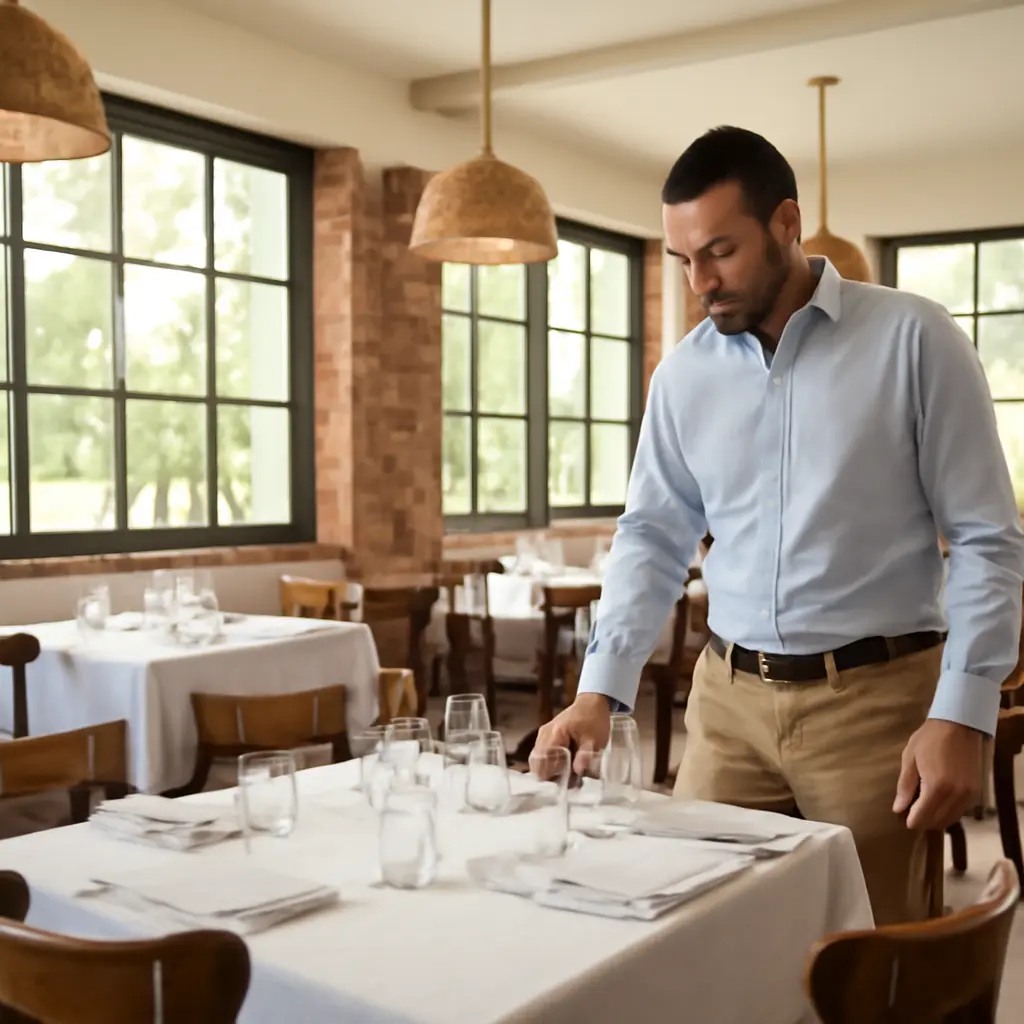
A world-class restaurant is one that consistently turns a meal into a memorable, trustworthy experience through excellent cooking, thoughtful hospitality, and disciplined operations. It is not defined by luxury or awards alone: the Michelin Guide, for example, says its stars assess the food on the plate, including ingredient quality, technique, flavor harmony, the chef’s personality expressed through the cuisine, and consistency. The same underlying standard can be seen in how guests experience service, atmosphere, accessibility, and value. These qualities matter in a large industry: the National Restaurant Association projected U.S. restaurant and foodservice sales of $1.1 trillion for 2024, while the American Customer Satisfaction Index has repeatedly identified food quality, staff service, and order accuracy among important drivers of restaurant satisfaction.
How culinary excellence defines a world-class restaurant
Culinary excellence is the reliable delivery of distinctive, well-made food, from ingredient selection and preparation to the balance and clarity of each dish. The Michelin Guide describes its star ratings as recognition of cuisine, not décor or service, and evaluates five food-focused criteria: ingredient quality, mastery of cooking techniques, harmony of flavors, the chef’s personality in the cuisine, and consistency across the menu and over time. This definition makes excellence more than an impressive signature dish: it is a repeatable standard.
Ingredient quality and sourcing
Ingredient quality concerns freshness, suitability, and how responsibly and intelligently ingredients are sourced. A restaurant may build its menu around local farms, seasonal seafood, or carefully selected pantry staples, but sourcing is not a virtue by itself: ingredients must fit the dish and be handled safely. The U.S. Food and Drug Administration’s Food Code provides a model for food-safety requirements, including temperature controls that help limit the growth of harmful microorganisms. A strong kitchen therefore pairs compelling sourcing with documented receiving, storage, and preparation practices.
Technique, flavor, and a recognizable point of view
Technical mastery means using methods such as roasting, fermentation, grilling, or pastry work accurately and purposefully. Flavor harmony is the way acidity, salt, sweetness, bitterness, texture, and aroma support one another rather than compete. A restaurant’s culinary point of view—its recognizable approach to ingredients and traditions—helps make the food memorable. The Michelin criteria connect these elements: a technically polished plate matters most when it is delicious, coherent, and expressive of the chef’s intent.
Consistency across visits
Consistency is the ability to deliver the same intended quality across dishes, shifts, and repeat visits. It depends on recipes, staff training, supplier standards, preparation routines, and tasting before service. The Michelin Guide explicitly considers consistency across the menu and over time, underscoring why one exceptional meal is not enough to establish enduring excellence. For guests, consistency reduces uncertainty; for a restaurant, it requires systems that preserve craft without making the food feel mechanical.
How hospitality and service shape a world-class restaurant
Hospitality is the human side of a restaurant visit: anticipating needs, communicating clearly, and treating guests with consideration. Service is the set of actions that delivers that hospitality, from a warm welcome to accurate timing and a thoughtful farewell. The two are related but not identical. Formal, highly choreographed service can suit a tasting-menu room, while a neighborhood restaurant may express hospitality through familiarity and ease. In either case, the guest should feel respected rather than processed.
Attentiveness, knowledge, and timing
Attentive service notices what a guest needs without interrupting the experience. Staff should be able to explain dishes, ingredients, and preparation accurately, and to coordinate pacing between courses. The American Customer Satisfaction Index’s restaurant studies track factors such as staff helpfulness, food quality, and order accuracy, reflecting how operational details shape guests’ assessments. A polished team handles questions and mistakes with calm, direct communication rather than relying on scripted friendliness.
Personalization and inclusive care
Personalization means adapting the experience where feasible while preserving safety and fairness. Examples include clearly identifying allergens, offering useful nonalcoholic pairings, accommodating mobility needs, and explaining menu choices to guests unfamiliar with a cuisine. The U.S. Food and Drug Administration identifies nine major food allergens, including milk, eggs, fish, shellfish, tree nuts, peanuts, wheat, soybeans, and sesame. Because allergen errors can have serious consequences, hospitality must be supported by reliable kitchen communication—not just a server’s good intentions.
Service recovery and trust
Service recovery is the response to a problem, such as a delayed course, an incorrect order, or a dish that does not meet expectations. Effective recovery acknowledges the issue, explains the next step, and resolves it promptly. It also gives managers a chance to identify recurring causes, such as confusing menu descriptions or weak handoffs between kitchen and dining room. A world-class restaurant does not promise that nothing will ever go wrong; it demonstrates that problems are taken seriously and corrected with care.
How atmosphere and design support a world-class restaurant
Atmosphere is the combined effect of a restaurant’s physical setting and sensory cues: lighting, sound, temperature, layout, materials, and visual identity. Design is successful when it supports the food and the occasion rather than distracting from them. The U.S. Environmental Protection Agency notes that indoor environmental quality includes conditions such as indoor air, lighting, and acoustics; these conditions influence comfort in places where people spend time. Restaurant atmosphere is therefore not merely decoration—it affects whether guests can relax, converse, and enjoy the meal.
Comfort, acoustics, and accessibility
Comfort encompasses appropriate seating, manageable noise, clear circulation, and a room temperature that suits the activity. Accessibility means that guests with disabilities can use the space and its services, consistent with applicable requirements such as the U.S. Department of Justice’s 2010 ADA Standards for Accessible Design. Practical details—step-free routes, accessible restrooms, readable menus, and enough space to move—can make the difference between an elegant room and one that excludes people. Thoughtful design serves a diverse range of guests without making accessibility feel like an afterthought.
A coherent sense of place
A coherent sense of place connects the restaurant’s setting, food, and identity. This might be expressed through regional ingredients, local art, architecture, or a menu that tells the story of a culinary tradition. The connection should be genuine and specific, not a collection of decorative cues. For example, a restaurant serving a regional cuisine can explain the origin of unfamiliar dishes and ingredients, helping guests understand the food while respecting its cultural context.
How operational discipline sustains a world-class restaurant
Operational discipline is the behind-the-scenes ability to make quality dependable: managing food safety, staffing, purchasing, reservations, waste, and communication. Guests may never see a prep list or temperature log, but they experience the results in safe food, accurate orders, and steady pacing. The National Restaurant Association’s 2024 State of the Restaurant Industry report projected $1.1 trillion in U.S. industry sales and described persistent cost and workforce pressures. In such a large, demanding sector, repeatable standards help restaurants protect both guest experience and business resilience.
Food safety and reliable systems
Food safety is the prevention of contamination and foodborne illness through sound purchasing, storage, cooking, cooling, cleaning, and employee practices. The FDA Food Code is a model used by state and local authorities as a basis for food-safety rules; it is not itself a single nationwide restaurant license. Strong operators translate applicable rules into daily habits, including temperature monitoring, handwashing, allergen procedures, and clear responsibility for corrective action.
Staff culture and training
A restaurant’s staff culture is the shared standard for how people communicate, learn, and care for one another and guests. Training should cover technical duties as well as judgment: how to describe a dish, flag an allergy, manage a delay, or ask for help. The U.S. Bureau of Labor Statistics’ Occupational Outlook Handbook describes food-service work as a large employment category with varied roles and training paths, highlighting the importance of clear onboarding and ongoing development. A respectful workplace can support continuity and service, though no single training program guarantees employee retention.
Value, transparency, and responsible resource use
Value is the guest’s judgment of what the experience delivers relative to its price, not simply the lowest bill. Transparency about menu descriptions, service charges, substitutions, and dietary limitations helps guests make informed choices. Responsible resource use—such as tracking food waste, planning portions, and using energy efficiently—can also strengthen operations. The U.S. Environmental Protection Agency’s food-waste guidance emphasizes prevention as a preferred approach, since avoiding surplus can reduce both wasted resources and disposal costs. Sustainability is most credible when it is measured and integrated into everyday decisions.
How real-world restaurant models illustrate excellence
World-class standards can appear in different formats; fine dining is only one expression. The Michelin Guide’s distinction between food assessment and other parts of a restaurant’s experience is a useful reminder that a celebrated kitchen does not automatically guarantee ideal service, access, or value for every guest. Conversely, an informal restaurant can be exceptional through a focused menu, strong execution, and generous hospitality.
The tasting-menu restaurant
A tasting-menu restaurant demonstrates excellence through a carefully sequenced meal, often with a clear culinary narrative. Its challenges include pacing, explaining unfamiliar ingredients, and adapting safely to dietary needs without compromising communication. The model works best when precision feels personal: each course has a purpose, and the team can guide guests through the experience rather than simply reciting descriptions.
The neighborhood institution
A neighborhood institution builds distinction through dependable food, fair and understandable pricing, and a welcoming relationship with its community. Its signature may be a small number of dishes prepared consistently rather than elaborate presentation. This model shows why “world-class” should describe standards, not a price category: a restaurant can be ambitious in care and execution while remaining relaxed and accessible.
The destination restaurant
A destination restaurant gives guests a reason to travel, often through a distinctive cuisine, setting, or connection to local producers. It must deliver on the promise before, during, and after the meal, including clear booking information and realistic descriptions of the experience. Its strongest form combines a memorable central idea with practical competence, so that novelty does not overshadow comfort, safety, or genuine hospitality.
Conclusion: the connected attributes of a world-class restaurant
A world-class restaurant brings together culinary excellence, hospitable service, a coherent and comfortable atmosphere, and operational discipline. Michelin’s food criteria show why quality, technique, flavor, identity, and consistency matter; customer-satisfaction research reinforces the importance of food, staff, and accuracy; and food-safety and accessibility standards remind operators that excellence must be responsible and inclusive. These attributes work as a system: a memorable dish is stronger when it arrives safely, at the right pace, in a space where guests feel welcome.
For diners, a useful way to assess a restaurant is to look beyond awards and ask whether the experience feels thoughtful from reservation to farewell. For restaurant teams, the next step is to review guest feedback, food-safety routines, staff training, accessibility, and consistency together. World-class dining is not a single style or price point; it is the sustained practice of making people feel well cared for through food and service.
Sources: Michelin Guide, “What Is a MICHELIN Star?”, https://guide.michelin.com/us/en/article/features/what-is-a-michelin-star; National Restaurant Association, 2024 State of the Restaurant Industry Report, https://restaurant.org/research-and-media/research/research-reports/state-of-the-restaurant-industry/; American Customer Satisfaction Index, Restaurants Study, https://theacsi.org/industries/accommodation-and-food-services/restaurants/; U.S. Food and Drug Administration, Food Code, https://www.fda.gov/food/retail-food-protection/fda-food-code; U.S. Food and Drug Administration, Food Allergies, https://www.fda.gov/food/food-labeling-nutrition/food-allergies; U.S. Environmental Protection Agency, Indoor Air Quality, https://www.epa.gov/indoor-air-quality-iaq; U.S. Department of Justice, 2010 ADA Standards for Accessible Design, https://www.ada.gov/law-and-regs/design-standards/2010-stds/; U.S. Bureau of Labor Statistics, Occupational Outlook Handbook, Food and Beverage Serving and Related Workers, https://www.bls.gov/ooh/food-preparation-and-serving/food-and-beverage-serving-and-related-workers.htm; U.S. Environmental Protection Agency, Food Recovery Hierarchy, https://www.epa.gov/sustainable-management-food/food-recovery-hierarchy.